Showing posts with label Seizures. Show all posts

Saturday, September 28, 2013

HSUS DOG RAID PICS,How CA legislation Will Create More SEIZURES

Join the Crusade Against HSUS Anti-pet laws and Pass it Forward to Everyone You know, and post this link to any sites that you can, and be sure to realize that HSUS and friends have 6 laws pending before CA legislature, and all of them are garbage. Garbage. All need to be trashed and kicked out.


URGENT: AB243 MUST BE OPPOSED! AB243 Opposit AUG09 pdf


Do you own  animals?   Then you don’t want to support HSUS (Humane Society of the United States) which uses both JP Goodwin (a criminal felon) and Michael Vick (dog torturer, criminal felon, from dog fighting) and probably others that we don’t know about right now.  Please read what is posted here, as this is your warning to watch out…. HSUS is aiming mostly for dogs, kennels [search warrants, possibly forcible]  and horses to seize, also using search warrants.  Below, we see the helper with HSUS seizing one of the pups taken ………….. helper is supposedly a vet for ASPCA if we understand it correctly.
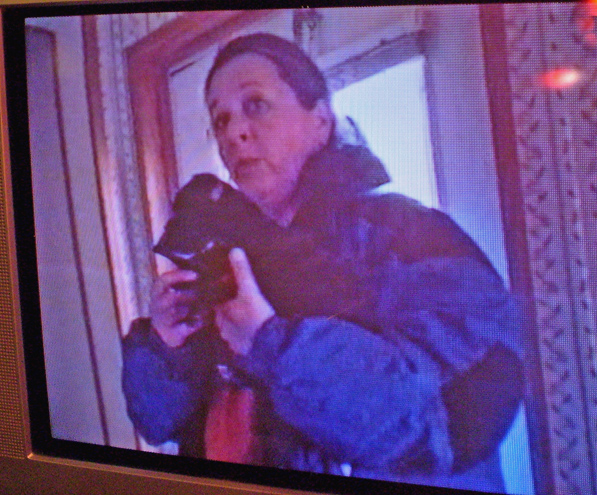

HSUSRiadSixPup


HSUS is telling Californians that anyone ‘accused’ of animal abuse even if acquitted, and thus exonerated— that  their animals should be FORFEITED…………… HSUS has a pending law for that.  You didn’t know????


 HSUS will have their cronies make those errant warrants to seize your animals, and even if you make it out as “not” guilty, you still pay thousands to get back what was yours from the start, and then you face (if law passes) either another hearing or another administrative determination whereby, you cannot be innocent  and must not be around animals, whereupon your animals can be forfeited ANYWAY.  


Unfortunately we can’t get this so it’s viewable online. But see below. The 6 proposed laws:


All Californians need to get up to speed on the 6 laws pushed by HSUS and proponents, [AB1122, 241, 242, 243, SB250, SB318], operating under different “shell” corporate names, where all of the laws work together to trigger one of the other laws proposed, basically to either seize animals, have them forfeited, or find you guilty even after you are acquitted. 


AB242…will trigger 250, 243 and 318; can easily spur CPS (child protective services) into seizing kids from homes and put into fostercare, this happened already in San Francisco when a rescued dog went after another smaller dog; triggers forfeiture. Your animal in altercation with another animal will trigger this law. Don’t care how it is worded, that is the reality. You get abuse citation.


SB250…will trigger 243, possibly 318; assumes natural state animals (unsterilized) are unsafe, penalty for any violation is sterilization, and may trigger forfeiture as well. Requires all animals sterilized at 6mo. [Just a re-run of AB1634 but worse]  Opposed by Dept. of Finance!


AB241…will trigger or can trigger 250, 243, 318; arbitrary number used to indicate “abuse” without it being abuse, just for a kennel owning more than X number of natural state animals, even pups/kittens would count, and boarding kennels/handlers have no exceptions. That means a third party can lose their dog because it was at a handler’s kennel, which might be over the X limit. Automatic forfeiture of animals; has nothing to do with abuse; would trigger 250 which would trigger forfeiture as well. Opposed by Dept. of  Finance  http://www.dof.ca.gov/legislative_analyses/LIS_PDF/09/AB-241-20090813120605PM-AB00241.pdf


AB1122…will trigger 250, 243 and possibly 318, impossible to amend, should be thrown out completely. Is categorized under “abuse” statute.  Would make “sales” illegal and therefore “abuse”  but if a non profit or animal rescue sells, it would be legal, with no ramifications for “abuse.” Makes legal conduct illegal, such as transferring an animal in any parking lot in the entire state. A volunteer private person using the Lexus car dealership (with sponsorship) to get homes for 15 cats would be illegal. Opposed by Dept. of Finance.


AB243… can trigger forfeiture after acquittal, and applied to search warrants if passed.  So exoneration via the courts will mean nothing, if they can confiscate and seize your animals anyway, plus you pay for it as well?  Problem nationwide is, search warrants are being used for barking complaints. Forcible entry is used for no kennel license (for 5 dogs) and etc.   An obvious ploy to kill more animals, seize more animals, and for proponents to sell more seized animals themselves. [See posting on forcible entry warrant on this blog]


SB318.. would allow forfeiture proceeds to go to non govt. proponent private corporations rather than the State, likely violates the CA constitution, and proceeds would be given to these groups even if all they do is kill all the animals and not save them. There is no cap on the proceeds, so it could amount to windfall financials to proponent groups, just for killing animals.  Since HSUS makes a habit of advocating to kill all pitbull dogs (like the Vick dogs, which were mostly saved) and has helped Louisiana pass a law whereby “seized” alleged fighting dogs can be killed immediately [claiming they are considered contraband]— so that a conviction of up to 10 years of hard labor would have to be defended after all the dogs had already been killed by the government?  [See below for LA code]


Proponents such as HSUS, ASPCA, local humane societies, etc,  can lobby District Attorneys to get forfeiture for their own groups, which are private corporations, not the State govt. This means the proponents groups are an interested party financially, and they should have nothing to do with being witnesses or have any bearing on the defendant. Yet surely that is what will happen, then they will ensure defendants are convicted, so they can gain financially from the forfeiture.


It looks like HSUS  helped get a law passed in Louisiana  awhile back, so that “seized” fightin’ dogs are deemed  contraband, and then can be euthanized “AS SOON AS POSSIBLE.”  Notice it did not say seized dogs, where owner is convicted, or where owner is proven guilty. Nope. Just seized. The apparent issue with this is that the alleged dogs cannot be contraband unless you can prove it.


But Not in Louisiana,  One doesn’t need to be proven  guilty to have the dogs all killed.  A picture of a dead dog must be good enough?  So just seize dogs, kill them, make allegations, oh well too bad, so sad?  Apparently the crime of having the “fightin” dogs may carry a 10 year sentence of hard labor, BUT they don’t need the dogs for evidence.


That is from the Louisiana animal cruelty statutes Section 102.6 A(2)…….. and they normally don’t even go to trial, because they simply don’t have the evidence.  HSUS raids need only swarm down like locusts upon the alleged owners, seize everything in sight, and then kill, kill, kill— and not worry about anything else.    


AND since HSUS gets the prosecutors to delay the cases for years, the statute of limitations runs for filing a civil 1983 claim, as you cannot bring a Federal action for the issue if your case has not been concluded finding you acquitted or you have not been otherwise exonerated!  Most statute of limitations do not go much over three or four years [many are only one year, barring tolling] , so if you can’t get your case filed before that, you are SOL.  HSUS knows that of course! Note– we are not saying dog fighting (if actually done) is a good thing.  Of course it isn’t. But one should have to prove the elements of a crime, not kill off the evidence beforehand, and with a law that allows it to boot!!! 


People of California— you need to contact your senators immediately in August 2009, while we still have a chance to flatten the tires of the HSUS Party Team as they take us all for idiots and make laws that say we are all guilty even if proven innocent, where RAIDS are the order of the day, and FORCIBLE warrants are used when there is no cause for such warrants!!!!! [See prior posting on that subject with picture of warrant from SoCal]


PHOTOS …………HSUS…………RAID………..


So let’s look at the promised HSUS dog raid, taking 12hr time, 9am to 9pm, where HSUS, ASPCA and many others, descended upon the family of the Woodall’s on their shaded property in Georgia, so they could seize those  ”fightin’ dogs”…………. Maybe you can tell yourself (if you know dogs very well) that no one in their right mind would put their face 5 inches from a vicious “fightin’ dog” ………nor would one bend directly over the head of the “dangerous  fightin’ dog”…………. nor would one be able to put a [red colored] loose lead on the “fightin’ dog’s” neck, and the “fightin’ dog” just walks ahead without even pulling out of the lead.  Nor would the “fightin’ dog”  puppies, [HSUS apparently claimed  both pups qualified], that they seized–elicit the smile on the seizer’s face as she held both pups in her arms. 


People–the time has come to realize that all that crap you hear/see that HSUS puts out about RAIDING RAIDING RAIDING is not all what it seems.


Think very hard when you view these photos. We have a lot more of them, could that be your family, your kids, your property?  You better believe it. 


THE PROPOSED LAWS BY HSUS AND FRIENDS WILL LEAD TO


NOT ONLY MORE ABUSE OF THE LEGAL SYSTEM,


BUT MORE  ERRANT  SEARCH/SEIZURE, MORE RAIDS, AND MORE FORFEITURE.


MORE ABUSE CITATIONS, AND MORE PENALTIES FOR LEGAL ACTS


THAT ARE TERMED “ABUSE” – WHEN THEY ARE NOT ABUSE. 


Remember–they are doing WARRANTS for raids- seizure for “barking”


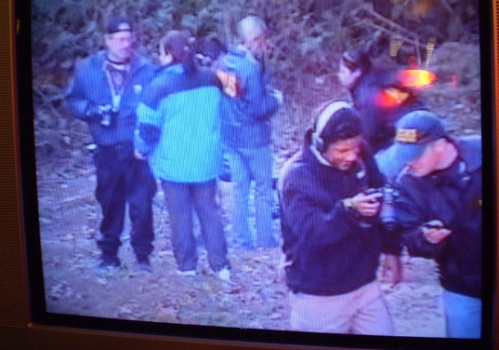
It happens with increasing, and unwarranted frequency.  HSUS is trying to turn up the heat to make it appear as if every neighborhood needs raiding. JP Goodwin leading the pack, JP Goodwin getting close and personal with dangerous “fightin’” dog, the ASPCA rig (white vehicle with overhead cab) and others. These photos are taken directly from videos played on the TV and they all will show fragmentation.  There were no dogfighting charges filed against owners, and the court ordered all the seized dogs to be released in less than 2 weeks. Instead, the animal control kept the dogs for 4 months in a shelter almost 5 hours away!!


We have spoken personally with the raided party, who enters dogs in weight pull, treadmill, and conformation.


——————————————————-
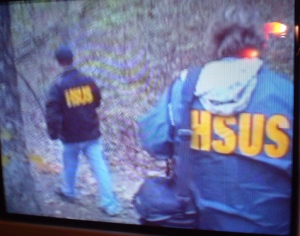

HSUSRaidTwoHSUSraidFiveHSUSraid OneWe can’t load many more pics due to excessively slow time loading. We will put more pics up and try and get them loaded on Photobucket. Have a lot of pictures taken directly from the video shoot.
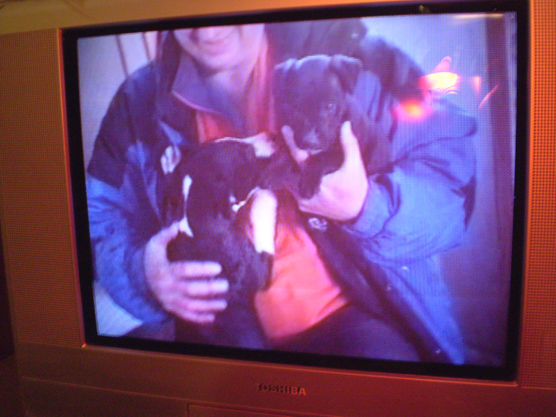

HSUSRaidSeven


Directly above, is the raiding and seizure of  2 puppies. Puppy seizer smiling, but you know how those “fightin’ dogs” are. Vicious!  I am so scared!


HSUSRaidTwentyOne


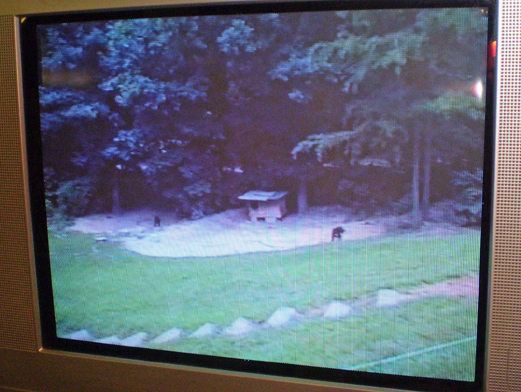
This is a sweep view out on the property. Most of the area is heavily shaded.


HSUSRaidTwenty7


Above, JP Goodwin being filmedwith HSUS Dream Team, pretending they are movie stars.
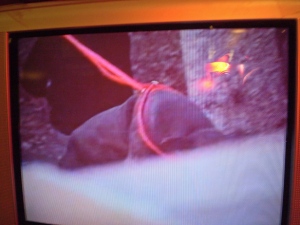

HSUSRaidFourteen


Now  does that look like a vicious dog being led away to be killed on that loose lead?  Or is that just another poor family dog being seized by HSUS? The picture is cut off because it was taken from inside the home, where HSUS and crew forced the family to stay inside from 9am to 9pm on the RAID day (and night.)


Below, the kids with one of  their dogs, which usually sleeps inside on the bed.
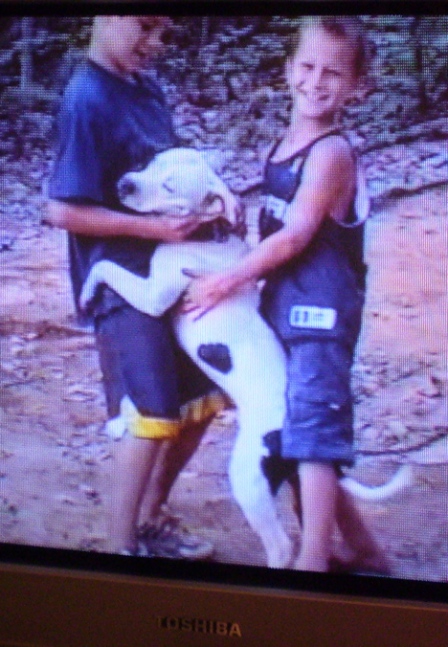

HSUSRaidThree


 HSUSRaidTwelve


Lower right is JP Goodwin yet again, with cohort. Lots of camera crews, and people from different groups, including but not limited to ASPCA.  HSUS financed an ASPCA rig just for seizing dogs in kennel or alleged “fightin” raids.  Maybe the one in the picture which is ASPCA (hard to read the ASPCA but it’s definitely there on the truck) is one paid for by HSUS.  Maybe that $ 250,000 donated to ASPCA is used to round up dogs.  Or maybe it’s just used to fleece the public?


Looks to us like they were all sorely disappointed that they had failed in 12hr to actually find any “fightin” dogs but they seized them ALL anyway.

Seizures: What to do

By Melissa McClelland


What are seizures?


Seizures are a sudden, uncontrolled movement of a portion of the body or the entire body. Seizures can be very mild, but they can also be very dangerous.  A seizure is caused by an abnormality in brain activity. Typically epilepsy, toxins, low blood sugar, brain tumors, and a few other medical conditions can cause abnormal brain activity. Pets may become unconscious, urinate, or defecate during a seizure. Long lasting seizures (more than 3 minutes) may cause fluid to build up in the lungs or brain.


What should you do if your pet has a seizure?


First and foremost, you want to prevent any injuries from occurring during a seizure. Keep your pet away from water sources and keep them from falling from a height such as the couch. Your pet may be confused and act aggressively when the seizure is over. It’s important to remove other pets from the area and don’t move too quickly or you may spook your pet. Do not put your hands near your pet’s mouth, and do not yell, hit, or throw water on your pet. You cannot stop a seizure; it will end on its own.


It is important to contact your veterinarian if a seizure does occur so you can find out what is causing your pet to have seizures. For more information follow the links below.


http://www.veterinarypartner.com/Content.plx?P=A&S=0&C=0&A=376


http://www.veterinarypartner.com/Content.plx?P=A&S=0&C=0&A=560


Cluster Seizures

02:05, 07:10, 10:50, 13:50 Continuing on from yesterdays cluster the seizures are about in line with previous ones in terms of their frequency.


Fortunately dad’s got another day off work so he’s been around to look after me.


In the car


17:10 I got all excited when dad was working on his car. I had to sit in the boot as that’s where I sit when we go out to the woods. As I lay there another seizure hit and before dad could get to me I’d fallen out of the car. I wasn’t really hurt, but it gave dad a scare.


23:10 After mum went to bed I was asleep in the kitchen when another seizure struck.

Friday, September 27, 2013

Wooftales » Blog Archiv » Preventing Seizures – Natural Dog Remedies Can Out-Do Drugs

ZorraWe have a dog that has idiopathic epilepsy and has been on Zanicimide for years. Dr. Jennifer Rammelmeier here in our area recently also recommended homeopathics as an alternative which we are planning on exploring, especially as our Zorra ages.


The article below from Natural Awakenings Magazine details some of these alternative therapies for use in treating seizures.


Preventing Seizures – Natural Dog Remedies Can Out-Do Drugs.


Canine Seizure | Treatments and Remedies for Dog Seizures and Hot Spots

How to Keep  Safe During A Dog Seizure


Each and every kind of dog can experience attacks. Like other human conditions, epilepsy has different stages that can predict the occurrence of the seizure. There are a lot of possible things that can happen during canine seizures and it is always important to take note of some precautionary measures whenever your dog is experiencing a seizure. If it is your first time to find out that your dog has epilepsy, then it is highly suggested that you take a short read on epilepsy in dogs and get some advice from your veterinarian. You can also join some organizations that cater to owners or pet lovers who would like to learn more about epilepsy in dogs.


As aforementioned, there are a lot of safety measures to be taken whenever a pet is experiencing an attack. If you are not aware, loud and sharp noises can worsen or increase the duration of  dog  seizures. It is always important to keep your animal as quiet and as calm as you can.


You should also make your surroundings peaceful and quite to avoid distractions. If you have other dogs at home, it is very possible that they will interrupt or attack the dog that is experiencing the seizure. It is important that you take away other dogs from the scene to avoid this kind of disturbance.  Pet health problems usually last for about 10 minutes or more if it is extremely severe but around 1-3 minutes if mild. If you would like to keep your dog safe, staying with it during the seizure will ease your worries. Apart from that, the dog itself will feel safer if there is a sight of its owner or master. Also, never forget to take note of the duration of the seizure whenever it occurs. It will help the veterinarian diagnose the condition and will also help in deciding on what treatment measures to take.
beagles are prone to dog seizures and epilepsy
Treating the problems is not an overnight thing. There are a lot of steps to consider before being able to fully prevent dogs from having seizures. There are a lot of medications for epilepsy in dogs that are already sold in the market. However, keeping your animal safe during a seizure should always be an important thing to remember. Through this, you are also helping your pet  to cope up with the situation when a dogs attack or seizure is occurring.  Here’s to great pet health!

Seizures in Dogs: Dogs With Epilepsy

I recently had an email from a former client who has a dog that suffers from seizures.Percy is a 4 year old yellow Lab with epilepsy. He has been on traditional ant-seizure medication, and is not responding very well now. He is suffering from seizures once a month, even on the highest doses of these medications.My former client asked me if there was anything she could do at home, holistically. She wants to avoid conventional medications as much as she can. So I sent her the information in this article. You may not have a seizuring pet, but you should be aware of the signs and possible solutions.Seizures in DogsThe signs of seizures vary, but they generally include some of the following symptoms. Loss or derangement of consciousness, contractions of all the muscles in the body, changes in mental awareness (from non-responsiveness to hallucinations), involuntary urination, defecation, or salivation, or behavioral changes, including non-recognition of owner, viciousness, pacing, and running in circles. Seizures consist of three parts:1) The pre-ictal phase (aura) is a period of altered behavior in which the dog may hide, appear nervous, or seek out his owner. He may be restless, nervous, whining, shaking, or salivating. This may last a few seconds to a few hours.2) The ictal phase is the actual seizure itself. This lasts from a few seconds to about five minutes. During this period, all of the muscles of the body contract strongly. The dog usually falls on his side and seems paralyzed while shaking. His head will be drawn backward. Urination, defecation, and salivation often occur. If it is not over within five minutes, the dog is said to be in ‘status epilepticus’ or prolonged seizure.3) During the post-ictal phase, there is confusion, disorientation, salivation, pacing, restlessness, and/or temporary blindness. There is no direct correlation between the severity of the seizure and the duration of the post-ictal phase. Despite the dramatic signs of a seizure, the dog feels no pain, only bewilderment. Unlike with us humans, dogs do not swallow their tongues. If you put your fingers into his mouth, you’re not going to help! You will run a VERY high risk of being bitten – and bitten very badly. Do NOT place your hands in his mouth. The important thing is to keep your dog from falling and hurting himself. As long as he is on the floor (or outside on the ground), there is little chance that he will harm himself. If the seizure continues for longer than a few minutes, his body temperature will begin to rise. If hyperthermia (over heating) develops along with a seizure, you will have another set of problems. Prolonged Seizure (Status Epilepticus) Status epilepticus is very serious. It is characterized by a seizure that lasts more than five minutes. When this occurs, your dog’s life is in danger. Unless intravenous medication is given quickly, death can occur. If your dog is in this state, you should IMMEDIATELY take him in for emergency veterinary care.Causes of SeizuresThere are many, many causes of seizures. Epilepsy is the most common reason and of least consequence to the dog. The other extreme includes severe diseases such as brain tumors. Fortunately, most seizures are due to epilepsy.Possible SolutionsWhen a seizure occurs, we begin by taking a thorough history concentrating on possible exposure to poisonous or hallucinogenic substances or history of head trauma. We also perform a physical examination, a basic battery of blood tests, and an electrocardiogram (EKG). These tests rule out disorders of the liver, kidneys, heart, electrolytes, and blood sugar level. A heartworm test is performed if your dog is not taking heartworm preventative very regularly. If these tests are normal and there is no exposure to poison or recent trauma, further diagnostics may be performed depending on the severity and frequency of the seizures. Occasional seizures are of less concern than when the seizures are becoming more severe and frequent. In this instance, a spinal fluid tap and fluid analysis may be performed. Depending on availability, specialized imaging of the head with a CAT scan or MRI might be performed. Fortunately, these additional tests are usually not needed.To The Veterinarian:We generally prescribe 1-2 weeks of anticonvulsant therapy. If there are no more seizures during that time, the anticonvulsants are gradually discontinued. The next treatment is determined by how long it takes for another seizure to occur. That may be days, months, or years. At some point, many dogs have seizures frequently enough to justify continuous anticonvulsant therapy. Since that means that medication must be given every 12 to 24 hours for the rest of the dog’s life, we do not recommend that until seizures occur about every 30 days or unless they last more than five minutes.It is important to avoid sudden discontinuation of any anticonvulsant medication. Even normal dogs may be induced to seizure if placed on anticonvulsant medication and then abruptly withdrawn from it. Your veterinarian can outline a schedule for discontinuing the medication.Hypoallergenic Diet:There are reports that show a link between diet and seizures in dogs. Every seizuring pet should at least try a commercial hypoallergenic diet for 12 weeks. You can also make your own elimination diet.Melatonin:This has been used an anticonvulsant for some dogs. Many dogs only have seizures at night.Homeopathic:Cicuta virosa. This can be given to control seizures.Serenity:Many pets with epilepsy will seizure in response to certain stimuli, such as loud noises or bright lights. Get to know what triggers your pet’s seizures, and avoid these situations.Try the above solutions to see what works for your dog. Note how I mention diet as a possibility: if you are not feeding your pet a quality premium NATURAL food, make the switch NOW. This will help with more than just seizures – this will help in almost all areas of disease. Do what you can! Become a member of my Inner Circle and stay up to date with ways to treat your dog at home. See the link to my site, theonlinevet, below. Until next time…


How to Treat Convulsions, Fits or Seizures in Dogs « How To 101

Convulsions or fits are usually called seizures by veterinarians. They are rela­tively common and have many causes. These causes can be due to problems outside the brain such as toxins, low blood glucose or liver problems. They can also be due to a problem within the brain itself such as epilepsy, encephalitis or tumours. Seizures can be generalised and cause unconsciousness, rigid limbs, continuous, violent, limb movements or ‘paddling’, salivation or froth­ing at the mouth and possibly urination or defecation. Partial seizures vary greatly but usually involve involuntary movements such as facial twitching or changes in behaviour. Sometimes a seizure may just be an episode of staring into space. Prior to a seizure, a period called the aura, the dog may be anxious and behave abnormally. Similarly once a dog has recovered from a seizure, they may be disoriented and are often very hungry or thirsty. They may even appear blind, behave very strangely and sometimes seem demented. This is called the post-ictal period and can last for hours or days, even after only a short seizure.


Seizures are upsetting for onlookers, especially if it is the first time that you have seen one. If your dog has a seizure for the first time, the cause may not be obvious, or there may be evidence that they have ingested a toxin, in which case you should take them to your veterinarian immediately. Seizures may occur due to low blood sugar or hypoglycaemia in diabetic dogs that have had an insulin overdose. They can also occur in young puppies that have not eaten regularly enough or have been vomiting. They can also be caused by the artificial sweetner, Xylitol. If you suspect that the seizure has been caused by low blood sugar you should rub some honey or another sweet substance on the dog’s gums, being very careful to avoid being bitten, and take them to your veterinarian immediately.


If they recover from the seizure, offer them something to eat and then take them to your veterinarian. When the cause for the seizure is not obvious you should take your dog to your veterinarian as soon as possible.


Regardless of the cause for the seizure you should move any objects such as furniture away from the dog so that they do not hurt themselves. You should not try to comfort or hold the dog as they are usually unconscious and the movements are involuntary. Similarly, do not try to rouse the dog. A seizure will last as long as it is going to last and talking to, yelling at or shaking the dog will not stop it. You should also not put your hand in their mouth as the dog may bite you involuntarily. Dogs rarely swallow their tongue or even bite it. You can start to comfort the dog once they start to recover.


If your dog has been diagnosed with a seizure disorder such as epilepsy and perhaps is on anticonvulsant medication, a seizure may not be as surprising or upsetting and the cause is usually more obvious. So there may be less urgency to see your veterinarian. However, you should take your dog to a veterinarian if a seizure lasts more than 90 seconds. Seizures typically feel much longer than they actually are so you should time this. Sometimes seizures will be continuous without the dog recovering and this can be very dangerous as it can cause the body to overheat and damage the brain. You should also take your dog to a veterinarian if your dog has more than two seizures in quick succession. If your dog is having a continuous seizure or is having seizures one after another you should try to keep them cool while you transport them to your veterinarian. Spray their coat with cool water or cover them with a wet towel and turn your car’s air conditioning onto maximum or open the windows.


It is also very important to make the environment as safe as possible for dogs with a seizure disorder so that they do not injure themselves if they do have a seizure or during the post-ictal period when they are very disoriented. Swimming pools and other bodies of water are especially dangerous as a dog can drown during a seizure. Cliffs and other heights where a dog may fall are also dangerous. These areas should be secured so that a dog with a seizure disorder cannot access them.


You may have medication to give your dog if they have a prolonged seizure at home. This may be a drug such as Valium (diazepam) that can be administered rectally. In my opinion this is not warranted unless the seizure has been continuing for longer than 90 seconds, however your veterinarian may have given you specific instructions for your dog. You can draw the Valium up into a syringe. The outside of the syringe can be lubri­cated with water-based lubricant and gently inserted into the anus. The plunger is then depressed and the contents evacuated into the rectum where it is quickly absorbed. Your veterinarian may also have instructed you to give your dog’s regular anticonvulsant medication early, as an additional dose or at an increased dose on days when your dog has had a seizure. This is usually very safe but can cause some sedation and drowsiness. If the additional medication is not controlling the seizures or if you have to continue giving additional medication for 48 hours because of ongoing seizures, your dog should be seen by your veterinarian. You should not try to give any oral medication to your dog while they are having a seizure.


Related posts:


  1. How to Treat Diabetes in Dogs

  2. How to Treat Nosebleeds in Dogs

  3. How to Treat Ticks, Insect Stings and Bites in Dogs

  4. How to Treat Heatstroke in a Dog

  5. How to Treat Hypothermia in a Dog

  6. Stray Dogs and the Cycle of Broken Bonds

  7. How to Treat Autistic Disorder

  8. New Flea Fighter for Dogs

  9. Dogs’ Best Friends – People Who Rescue and Rehome

canine seizures | Canine Seizures


My beautiful Chancellor

My beautiful Chancellor


Four and a half months since last seizure; first seizure of the year; and it was very mild – no urine; very little saliva; and no post ictal. I administered ice pack right away; got all house dogs out (I could see Chancellor was going to have a seizure by the way he was walking, and looked dazed) – and got his Keppra ready to give him. The seizure only lasted 1 M 30 seconds approx (usually his seizures last between 3 and 6 minutes so this was very low). It was 4:47 a.m. just 15 minutes before his next Keppra was due. What was different? We had two consecutive boarders; and Chancellor got a hold of one of the boarder’s dropped treats last night which contained “salt”. So just that tiny bit of change can throw the system into turmoil. Stress, coupled with this led to a very mild seizure. A MILD seizure is a first for Chance – he came right out of it and at 5:13 a.m. is lying at my feet resting. Rare. Usually after a seizure we have one to two hours of pacing, running into walls – no vision inhibition this round. So many things to be thankful for. Seizures 2012: 4 First seizure 2012: May


Chancellor is on 3 Keppra a day – last night at 1:19 a.m. Chance started pacing and panting and acting pre-ictal. He was drinking a lot of water, walking strangely, weaving, getting up and down, looking frantic, sticking by me, very unrestful. So at 2:35 a.m. I gave him a 4th Keppra; we did a lot of Ttouch hair slides and ear strokes and application of “ice bag” to area behind last rib and base of tail. By 4:09 a.m. I had diverted a seizure and he is fine as I type this. I think there is a lot unknown about seizures and the hope is that the veterinary community studies it more thoroughly! At 4:09 a.m. Chancellor lay down to sleep the rest of the morning, had his hypothyroid at 6:30 a.m. (skipped the 5 a.m. Keppra) and had an 8:30 a.m. Keppra. Now we’ll go back to his regular schedule of 5 a.m., 1 p.m. and 9 p.m. Today he is energetic, playing, acting normal and resting. 


Last seizure was August 18. Today is December 7th. The past week we had gone to San Diego on vacation and had a caretaker for the dogs – so there was some definite stress. Prior to that we had a boarder. Stress can cause seizures and so I am very careful Chancellor has a lot of stress vacations.  Image


Here we are three months later and no seizures. We did have an incident where Chancellor had twisted his back leg and had trouble walking for about three days – but you wouldn’t know it today – as he races through the forest off lead having a good old time. What I did was add B Vitamins – 2 tabs – to the 1 p.m. Keppra medication. So that is working very well and I am hoping it continues to do so.


After Chancellor’s last seizure, I posted this question to a great yahoo group for dogs with seizures K9 Epileptics: I’ve noticed a pattern over the past 3 – one being springtime and the other happening after the last Keppra of the night. I’m thinking I need to increase the evening dosage. Has anyone noticed this in their dogs? We just had levels done and hypothyroid pill increased by 1/2 tablet to 7 per day and Keppra levels were good. Waiting on the kBr at the moment.


Noticing patterns are so important and taking a proactive stance on treatment of your dog is vital. The answers I received were wonderfully revealing (the difference you’ll see is Chancellor is NOT on PB (phenobarbitol) but IS ON kBr (potassium bromide). The references to half life differences if a dog is on PB vs. kBr were interesting to note.


Answer from list leader Alexandra: Technically, there is not a scientifically determined ‘range’ for dogs (in Keppra),so they (veterinarians) are going by human values. I am not sure if human ranges are the same for therapeutic ranges in dogs (for PB?) but it is what we all are going off of. Is Chancellor on PB? From Plumb’s vet manual for Keppra – the half life in a dog for Keppra while on PB (I would need to re-read to be precise) is ~1.73 hours (half of the half life without PB). I dose 4 times a day, but even that would fall short on coverage. I am not sure how often you dose, but you might consider giving an extra dose at bedtime. We give meds (Keppra) at 11pm, then again at 5-6am (Keppra). Could be that the Kbr needs adjusting.


This was my gut feeling in watching Chancellor’s behavior and will be a consideration after some more research.


Another post was equally as interesting and certainly food for thought.


By Lynne: I routinely up PB from 105mg BID to 120mg BID when the
temperatures get above 80 degrees (F) for more than a week. If he gets
twitchy, his evening PB will be increased another 15mg. Once the
temperatures back down to the 70s and below, we’ll drop his dose back down.
We’ve been doing this for about three years now.


NOTE: Chancellor’s last seizure was during the BIG full moon, a time when temperatures do change and even other unexplained phenomena may be occurring. Shows how sensitive dogs are to their surrounding environment, weather, atmospheric changes.


These are considerations veterinarians need to take more seriously when treating a dog with seizures and provide proper protocols for dog owners.


http://www.sciencedaily.com/releases/2012/03/120323205337.htm This is a study on a new epilepsy gene located – chromosome 37 – for idiopathic epilepsy in Belgian Shepherds (which Chancellor is – Belgian Tervuren).


The study says: Both focal and generalized idiopathic epilepsies occur in Belgian Shepherds. The research group of Professor Hannes Lohi, working in collaboration with Danish, Swedish and American researchers in an EU-funded project, has made a major breakthrough by identifying a chromosome region associated with the most common form of epilepsy in dogs. By comparing the genome of dogs with epilepsy and healthy control dogs a gene region in chromosome 37 was discovered, which if homozygous, increases the risk of epilepsy seven-fold. In addition the research findings indicate that other, still unknown, genetic risk factors may be present in the breed.


Ongoing research will continue: “”The identified genomic region is likely to be the strongest single risk factor for epilepsy in Belgian Shepherds, and we are studying an interesting gene variant causing an amino acid change in the protein level. However, this homozygous amino acid change is also present in one fifth of healthy Belgian Shepherds. The research continues in the breed and aims to identify the specific mutation for genetic testing in this loci and possible in other chromosomes. The need for the gene test is urgent since as much as 20% of the dogs in this breed are estimated to have epilepsy,” comments the first author of the article Eija Seppälä, PhD.


It is very satisfying to me and Chancellor that these studies are prevailing and it is our hope that for our breed and for dogs in general that seizures will be a malady of the past (as breeders take note of these studies) and/or more help in the form of holistic, nutritional and medical keep seizures few and far between.


Last seizure occurred 3 months ago. Most of this year’s seizures have occurred AFTER giving the last Keppra of the day (one was because I ‘forgot’ to give one dosage), just minutes after. This one occurred at 940 P and lasted 3 minutes. Grand Mal.


When seizures happen I always ask what was different, because there are causes. In this case:
1) Getting a new puppy and having company were major stress factors. Stress easily causes Chancellor to have a seizure, so I try to keep him as unstressed as possible from ttouch, to music getaways, time alone and lots of walks.
2) He may have had too much mozarella cheese and hubby gave him a pizza crust in a time of weakness, lol. All these items contain salt and are NOT to be given if a dog is on Potassium Bromide. It interferes with the absorption and effects of the kBr. When seizures are less frequent we tend to sometimes forget.
3) The only other difference was about 5 days ago I added a Hip and Joint PLUS by Best Pet Health. At the time the ingredients seemed to be good and I did very little research on it. What I found was:


Glutamine (L-Glutamine), Sodium Gluconate – Manganese and Copper Gluconate – side effects – Seizures: There is some concern that glutamine might increase the likelihood of seizures in some people. Avoid use. (WebMD) Gluconate interacts poorly with kBr.


And worse, Glucosamine Hydrochloride (from shellfish) and Chondroitin Sulfate while okay in normal dogs CAN have bad side effects on dogs with neurological disorders and therefore, exacerbate seizures.REPORT HERE: http://www.thedogpress.com/DogFood/Ingredients_Liquorman.asp


From this site: (and understand when you are dealing with seizures the smallest, unknown can be causative, and stimulate seizures)


Chondroitin Sulfate
This is normally a remedy for arthritis and degenerative bone and joint problems. It is considered a nutraceutical (this name represents the blurring of lines between food and drugs), and there are no clinical studies to support the use of it in dog food and cat food.


Side effects range from nausea, diarrhea, stomach pain, bloating, and vomiting to elevated blood pressure. It is a natural blood thinner, therefore use should be suspended before surgical or dental procedures. Since this warning does not appear on pet food labels, Chondroitin Sulfate could be problematic. There are however, warnings from the nutraceutical industry for use during pregnancy and breast feeding. This ingredient should be of concern to dog or cat breeders who have experienced reproductive problems that they believe are caused by pet food.


Glucosamine Hydrochloride
While Cargill, Inc. is making glucosamine hydrochloride from corn and claiming to be the only USA producer, most such products on the market are made from the outer shells of shellfish and much of it comes from India and China. Most makers claim there are no known side effects from glucosamine hydrochloride (then why include it if it has no effect?) but many nutritionists consider it risky for people or pets that are allergic to shellfish which can cause severe reactions in humans, including anaphylactic shock. In addition, some dogs and cats could react to the version made from corn. It is used as a remedy for osteoarthritis and probably should not be used in pet food that will be fed to pets that do not need treatment.


If your pet exhibits stomach upset, indigestion, gas, bloating, diarrhea or chronic itching, you may wish to avoid corn-based ingredients and/or shellfish derivatives such as Glucosamine Hydrochloride which incidentally, does not show up on the AAFCO list of required nutrients. It is also noteworthy that glucosamine and Chondroitin are considered nutraceuticals and therefore are not strictly controlled by the FDA. Also check labels for poultry by-product meal or fish meal as listed as natural sources of glucosamine.


In addition I started seeing more itchiness and dandruff (my dogs have NEVER had dandruff and Chancellor never has) – well folks, Brewers Dried Yeast can have allergic reactions to dogs with seizures and cause…wait for it….itchiness. This one thing clued me in that something wasn’t quite right. Now I know.


There are more ingredients listed in the product, but I don’t have to go much further to understand for joint discomfort I have to look further than false claims and no warming labels. Having dogs with seizures means we need to go over each and every ingredient BEFORE it passes through the mouth or our treasured family members. Each life stage presents a different situation for our canines. Had I known these ingredients were indeed “toxic” to his system, they would not have been given.


All that said, all seizures in 2011 have seen quick recovery (what was usually 2 hours, is now 45 minutes to 1 hour. We can only try to do our best and KNOWLEDGE is important with seizures and increasing time between or doing away with them altogether.


Assume nothing.


There have been about 7 seizures since last posting. In between that and this one, 10 weeks and 2 days apart (alleluia) did two things added Keppra to medications first week in March, and two weeks after that had Chancellor go through an animal communicator and healer. Otherwise we changed very little. This seizure came on with no prior warning or symptoms and was a Grand Mal, May 21, at 241 a.m. lasting 3 minutes. So we start over but I am thankful for a very long reprieve so Chancellor could heal a bit.


There have been about 7 seizures since last posting. In between that and this one, 10 weeks and 2 days apart (alleluia) did two things added Keppra to medications first week in March, and two weeks after that had Chancellor go through an animal communicator and healer. Otherwise we changed very little. This seizure came on with no prior warning or symptoms and was a Grand Mal, May 21, at 241 a.m. lasting 3 minutes. So we start over but I am thankful for a very long reprieve so Chancellor could heal a bit.


A five day reprieve from the 14-day ritualistic seizures. It is 12/15/2009 – 1:16 AM seizure began, ended two minutes later. This one was different than all the others, Chance didn’t come to get me, it was like watching slow motion, a deep head turn to the left, and it took 3 hours (usually 2) to come out of it and settle into rest. He is now resting at my feet after this exhausting episode. Why 3 weeks instead of 2, I have no idea, but we are thankful for this brief time span between.


One noticeable fact which I will pursue is I accidentally gave him 9 thyroid pills one day, a day before day 14. Is this what it means, his thyroid medicine is still too low. Findings later.


Another thing to note is last year he went longer between seizures at this time/month. We had a cold snap, ice, some snow etc. Does that have anything to do with it?


Bottom line, no one knows. Sigh.


Two weeks to the day and the hour since the last seizure. I’m calling this the red zone. Very emotional when this happens on a holiday and am writing this two hours and after Chancellor has come back to us fully. During this two hour period after the seizure he is disoriented, clearly has limited sight, gets very hungry, paces frantically as if running a race and can’t stop – he must pace 20, 30 miles during this period. He pants, and his eyes look worried, sad, but his countenance is with purpose to shake this demon off afterwards. He sees me cry and is more concerned about me, coming to hug me with a low tail wag, and pushing me with his nose as if to say “aw, I’ll be fine” and then he bravely sets off to pace it out. Of course, today was especially emotional as it is Thanksgiving – still I am thankful for many things. I’m thankful Chance survived, that it was a milder seizure, I’m thankful for family and friends and my home. There is always light at the end of the tunnel. Chance is now playing with his ball, the sound of his barking is wonderful to hear as he joins in with Kody for a passing owner and dog, and he has calmed down, lieing down now after the long race back to normalcy. To all who read this I’m not writing so you can feel sorry for Chance or for me, I am writing to talk about our journey, to post the patterns, the research, the volumes of study in hopes science can find a way to at least extend seizures, or do away with them.


Happy Thanksgiving and I hope you’ll give your healthy furballs a big hug, and be thankful for your families!


dog seizures Archives - Ask A Pet Pro


It’s now 06 September 2012. About 5 weeks ago, our dog, Chiqui woke, jumped down from bed, threw-up, then it was painful to watch the staggering for 5 minutes and recovered in 10 minutes from the onset.


Today, she did it again. Recommendations??


What causes American Eskimo Spitz (a dog) to have seizures? and What can you do to prevent the seizures from coming back?


Thanks,
Jill


I have a 21 month old female collie who started exhibiting neuro issues after receiving a Lyme booster in January. She is now having one petite mal seizure about every one to two months. Rather than conventional Rx with phenobarb or KBr, is there something natural that can be given? I would rather not have to watch her acquire new problems from side effects.


Thursday, September 26, 2013

LBAH Newsletter- Seizures?

Hello,


One of the most traumatic events to witness is a pet that is having a seizure. Even though most of them last only a minute or two at
most, they seem to go on forever.


It is helpful in making a diagnosis if you carefully keep track of the pattern of your pets seizures by marking on a calendar when they occur and a description of what took place.


It is important to differentiate a seizure from other problems that can cause a loss of consciousness and look similar, notably heart and breathing diseases. When a seizure occurs one will usually observe the following signs,
sometimes alone or in combination:
-Stiff muscles followed by rhythmic contractions or running motion
-Facial twitching and chomping of the jaws
-Urination, defecation and extra salivation


If your pet is experiencing a seizure it is important to minimize the chance your pet will hurt itself. Move furniture or other objects that can cause injury and keep children away. Do not put your hand in its mouth if it turns blue because it will not swallow its tongue. The blue color will go away when the seizure subsides.


Most seizures rapidly run their course and your pet returns to normal in a short period of time. If the seizure does not subside, or repeats itself in a short time, then your pet needs immediate veterinary care to stop the seizure. Fortunately, this is a rare problem.


A veterinarian should examine any pet that has a seizure since there are a multitude of causes. Several different types of diagnostic tests will be recommended depending on your pet’s breed, age, physical exam findings, and pattern of seizures. Sometimes a diagnosis can be made with a simple blood test, other times sophisticated tests like brain wave scans and MRIs are needed.


Depending on the diagnosis, your pet might be given a specific treatment to cure the problem, or put on anticonvulsant medication
to control the problem. The most common anticonvulsant medication used is Phenobarbital. It will be used for the rest of your pet’s
life. The blood level needs to be checked every 6 months to ensure we are at the proper dose, this is easily accomplished with a blood
test.


Our web site at WWW.LBAH.COM has detailed information on seizures. Use the Disease Search section from the home page and scroll down to seizures.


Seizures | Treatments for Dog Hot Spots

Treating Seizures in Dogs Naturally


There are medications available today to treat epilepsy and seizures in dogs, though they should always be used in accordance with the advise of a veterinarian. Many people are searching for natural methods of treating dog seizures. This is in part due to the fact that natural medication comes with no side effects – this alone is a good reason for owners who love their dogs to choose these alternatives. However, true epilepsy in dogs cannot be removed through natural means. Ask a qualified veterinarian to test the dog to verify the cause of its seizures. Many veterinarians like Jill Muller DVM recommend natural treatment for epilepsy in dogs!


Some pets get seizures when they play on a lawn which has been treated with poisonous pesticides and other diseases which affect glands. If your pet has a calcium deficiency caused by a poor diet, this too can trigger seizures in dogs. Home treatments can help your pet regain lost nutrients.


Epilepsy and Dog Seizures Can Be Managed and Treated Natrrally


There are several natural ways to treat dog seizures. One method uses magnesium supplements. Giving your pet magnesium supplements can help reduce seizures. A veterinarian should be consulted as to the correct dosage for the dog. Uncooked virgin coconut oil can also be extremely beneficial when added to the pet’s food. Homeopathic remedies may also be used, though care should be exercised when using them. They must be introduced in small increments. In this treatment process, vegetables and minerals are used to provoke a response in your pet’s system. Advice from a qualified homeopathic veterinarian should be sought after for this treatment in order to assure that no harm comes to the pet.


Finding the underlying cause of the dogs seizure is important. Treating the pet using herbs can be effective, yet risky. Herbal remedies should never be given just because they are safe for humans. Some herbs can actually kill the pet, and if the animal has existing health problems with its internal organs, the remedies can do irreparable harm. Be sure to consult a qualified herbalist before treating the pet at home. This will ensure that the pet receives the right treatment. Acupuncture is gaining popularity for pets as well as humans. This method can be used to ease epilepsy in dogs. The pet will not feel any pain, and the veterinarian can assist in the process. Pets can be effectively treated for seizures in dogs through acupuncture.


epilepsy in canines

Dog Seizures - Guide On Seizures In Dogs

Overview of Seizures in Dogs


Watching your dog during a seizure can be a very stressful experience. However, by understanding the definition, causes and treatment for seizures in your dog, it’s possible to find an effective treatment procedure for this condition. There are many different types of seizures that may affect dogs, each of which have several defining traits.


Types of Seizures in Dogs


1. Generalized (also called Tonic Clonic) Seizures


This type of seizure may be either “Mild” or “Grand Mal” (severe). In the “Tonic” phase of this seizure, a dog typically loses its balance and immediately extends its limbs. This usually continues for roughly 20-30 seconds before the next phase (the “Clonic” phase) begins. In the Clonic Phase, a dog will begin a “running in place” motion, which may be combined with contraction of the jaw muscles.


2. Petit Mal Seizures


This type of seizure is fairly rare in dogs. Petit Mal seizures are characterized by upward rotation of the eyes and brief unconsciousness. There is still some debate among veterinarians about the occurrence and classification of Petit Mal Seizures.


3. Partial Seizures


A Partial Seizure will typically only involve one area of a dog’s body. This may include uncontrollable spasms of a single lib, facial muscle contractions, or slight jerking of the muscles. It is possible for a Partial Seizure to progress to a Generalized Seizure.


4. Complex Partial Seizures


Complex Partial Seizures involve the frequency of complex behavioral traits that are repeated with each seizure. This may involve sensory or visual sensations that will cause strange behavior in a dog. Biting of limbs, hysterical running, aggression and smacking of the lips are other common behaviors that are associated with Complex Partial Seizures.


5. Status Epilepticus


This defines a seizure that lasts longer than five minutes, and may end up to being up to 30 minutes in length. It’s possible for several seizures to occur, with no period of coherency in between. It’s difficult to discern between this type of seizure and Cluster Seizures, though both are considered to be life-threatening.


6. Cluster Seizures


This type of seizure involves the mutiple occurrence of several seizures during a single episode. It’s possible that Cluster Seizures may be confused with Status Epilepticus.


The Three Stages of Seizures in Dogs


When experiencing a seizure, an affected dog will typically go through three separate stages.


1. Pre-Ictal Phase


This is a period of time before the actual seizure in which a dog’s behavior will begin to be affected. This may include nervousness, trembling, constant salivation or incessant whining. The period of time in which this phase lasts is uncertain. Sometimes the Pre-Ictal phase may last for several seconds, or it may continue for a few hours.


2. Ictal Phase


This phase is characterized by the actual onset of the seizure. Most seizures usually last from a few seconds to several minutes. If this phase continues for longer than five minutes, it’s called “status epilepticus”, also known as a prolonged seizure. During this phase, a dog’s muscles will visibly contract in an uncontrollable spastic motion. Most dogs may fall over during this period, appearing stiff-legged and paralyzed while convulsing. Sometimes a dog may lose control of their bowels or salivary glands during this phase.


3. Post-Ictal Phase


This is the period of time after the seizure where a dog’s behavior is still abnormal. A dog in the Post-Ictal phase may appear disoriented, confused, and be salivating excessively. Temporary blindness may also occur during this phase.


Read More

Dog Seizures | Absence seizures


Dog Seizures

NewsNo Charges In Dog’s Death
PALM DESERT — The Riverside County District Attorney’s Office won’t file charges against a veterinarian arrested last month after his dog died when it was left in the doctor’s parked vehicle in front of his office. … Read News


PDF fileCANINE EPILEPSY – FITS – CONVULSIONS – SEIZURES – ARTICLE …
The treatment of fits and epilepsy in the dog Keywords: canine epilepsy, seizures, convulsions, fits, status epilepticus, homeopathy, homeopathic treatment, heredity, hereditary, idiopathic, diet, nutrition, injury, vaccine, vaccination, potassium bromide, diazepam, phenobarbitone, acepromazine … Retrieve Full Source


WikipediaBark (sound) – Wikipedia, The Free Encyclopedia
A bark is a noise most commonly produced by dogs and puppies. Other animals that make this noise include wolves and quolls. Woof is the most common representation in the English language for this sound (especially for large dogs). Other transliterations include the onomatopoeic ruff, arf, au au … Read Article


pictures of Dog Seizures

PDF fileSeizure dogs
Want the dog to do and work out a plan with a certified assistance dog trainer. Getting a dog with the special skill of recognizing seizures in advance is another matter. … Fetch Document


photos of Dog Seizures

NewsFarewell To Man’s Best Friend
Normally, the copy in this space is devoted to you, the readers of BizTimes. But this week, it’s all about me. That’s because I am not capable at this moment of thinking about anything other than our family dog, Rosie. A few hours ago, we had to put Rosie down. … Read News


pictures of Dog Seizures

PDF fileWag The dog: Skepticism On seizure Alert Canines
In a different study and the only one in which dog responses were studied objectively and independently, two dogs were observed during their owner’s VEEG stays: The first failed to warn of impending events for seven of eight seizures; the second alerted the patient prior to a documented psychogenic … Doc Viewer


PDF fileStages Of seizures
Must be taken to prevent the dog from injuring itself at this time. * Status Epilepticus can occur as one continuous seizure lasting 10 minutes or more or as a series of multiple seizures in a short time with no period of normal consciousness intervening. … Fetch Doc


Dog Seizures images

PDF fileSeizure-alert dogs Are Focus Of
Researchers want to know what dog trainers have to say about the reliability of training dogs to “detect and alert. “Among the questions team members hope to answer are whether the ability to detect seizures, if some dogs do have it, … Return Document


Dog Seizures pictures

PDF fileUnderstanding Canine Epilepsy
5 minutes or the dog experiences two or more seizures within a short period of time for which the dog never regains full consciousness between each seizure) immediate emergency medical … Doc Retrieval


photos of Dog Seizures

PDF fileSeizure Dogs – BC Epilepsy Society
Not all dogs have the temperament to be a service dog let alone have the innate ability to sense a seizure; what seems to be agreed on is the sensing of seizures is NOT a learned skill but is quite definitely an innate one that … Retrieve Doc


PDF fileCanine Epilepsy And Lafora Disease
The owners of a seizuring dog should also be informed from the start that despite all the commitment and expenses dedicated to their pet, it is very likely that he/she will continue to experience seizures (hopefully at a reduced … Content Retrieval